Speech Therapy helps children with autism develop communication skills such as expressing needs, understanding others, and engaging in social interaction. It supports both verbal and non-verbal communication using practical, personalised strategies. Early and consistent therapy helps children communicate more confidently in daily life.
If your child is autistic and finds communication challenging, you are likely looking for clear answers, not theory. You want to know what actually helps. Speech Therapy focuses on real-life communication so your child can connect, express themselves, and participate more comfortably at home, school, and in social settings.
What does communication look like for autistic children?
Communication is not just about talking.
Many autistic children:
- Use limited or no spoken words
- Communicate through gestures, sounds, or behaviour
- Repeat words or phrases
- Find back-and-forth conversations difficult
- Struggle to understand social cues
These differences are part of how your child experiences the world. A neurodiversity-affirming approach respects these differences and focuses on building communication in ways that work for your child.
How does Speech Therapy help children with autism?
Speech Therapy focuses on helping your child communicate in ways that are meaningful and functional.
A speech therapist may support your child to:
- Express wants and needs clearly
- Understand language and instructions
- Develop social communication skills
- Use alternative communication methods if needed
- Improve clarity of speech when appropriate
Therapy is not about forcing your child to speak in a certain way. It is about expanding their ability to communicate effectively.
According to American Speech-Language-Hearing Association, Speech Therapy supports both verbal and non-verbal communication for autistic individuals, focusing on functional communication in everyday environments.
What does Speech Therapy for autism actually look like?
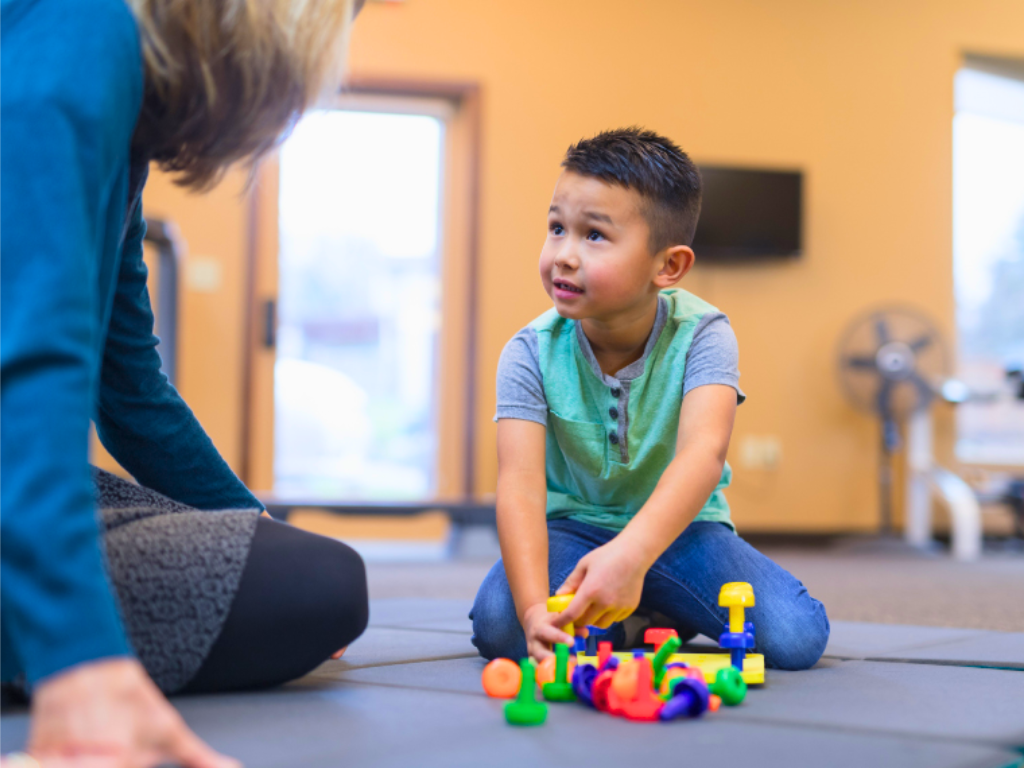
Speech Therapy is practical and tailored to your child.
Sessions may include:
- Play-based interaction to build engagement
- Visual supports such as pictures or communication boards
- Structured activities to encourage turn-taking
- Modelling simple language your child can use
- Supporting alternative communication methods like AAC
Therapy is child-led where possible. Your child is not expected to sit still or perform on demand. Instead, communication is built through activities that feel natural and motivating.
You can learn more about how therapy works through the Speech Therapy services offered at Advantage Therapy.
Can non-verbal children benefit from Speech Therapy?
Yes, absolutely.
Speech Therapy supports communication in many forms, including:
- Gestures and signs
- Picture-based systems
- Communication devices (AAC)
- Sounds and approximations
The goal is communication, not just speech. Many children develop spoken language over time when they first gain confidence using other communication methods.
How does Speech Therapy support social communication?
Social communication is often one of the biggest challenges for autistic children.
Speech Therapy helps children:
- Take turns in conversations
- Stay engaged in interaction
- Understand others’ perspectives
- Respond appropriately in social situations
This support is practical and happens through play, shared activities, and real-life scenarios.
Approaches like DIR can also support social communication by focusing on emotional connection, engagement, and relationships.
How does Occupational Therapy work alongside Speech Therapy?
Many autistic children benefit from both Speech Therapy and Occupational Therapy.
Occupational Therapy supports:
- Sensory processing
- Emotional regulation
- Attention and participation
When a child feels regulated and comfortable, communication becomes easier.
At Advantage Therapy, Speech Therapy often works alongside Occupational Therapy to provide a more complete and supportive approach.
What role does neurodiversity play in Speech Therapy?
Modern Speech Therapy follows a neurodiversity-affirming approach.
This means:
- Your child’s communication style is respected
- Therapy builds skills without trying to “fix” your child
- Strengths are recognised and used in therapy
- Goals focus on meaningful participation, not masking
You can explore more about this approach through the Neurodiversity framework used in therapy.
How long does Speech Therapy take for autistic children?
There is no fixed timeline.
Progress depends on:
- Your child’s communication profile
- Consistency of therapy
- Support at home and school
- Individual strengths and needs
Progress may look like:
- Increased attempts to communicate
- Reduced frustration
- Better understanding of language
- More engagement with others
Speech Therapy focuses on long-term communication skills, not quick fixes.
When should parents start Speech Therapy for autism?
The earlier, the better.
You should consider Speech Therapy if your child:
- Is not using words or has limited speech
- Struggles to communicate needs
- Finds interaction difficult
- Shows frustration related to communication
Early support helps children build foundational skills that support learning, relationships, and independence.
Where can families access Speech Therapy for autism?
Advantage Therapy provides Speech Therapy for autistic children across Norwest, The Hills Shire Council, and the wider Hills District. Therapy is tailored, practical, and respectful of each child’s unique way of communicating.
Services are available in-clinic and through telehealth, making support accessible for families across the region.
People Also Ask About Speech Therapy for Autism
Does Speech Therapy help autism?
Yes, Speech Therapy helps autistic children develop communication skills, including speaking, understanding language, and using alternative communication methods.
At what age should an autistic child start Speech Therapy?
Speech Therapy can start as early as concerns are noticed, often in toddler years. Early support leads to better outcomes.
Can autistic children learn to speak with therapy?
Some children develop spoken language over time, while others use alternative communication methods. Both are valid and effective forms of communication.
How often should Speech Therapy be done?
Frequency depends on your child’s needs, but consistent sessions combined with home support lead to better progress.
Frequently Asked Questions
Is Speech Therapy only for non-verbal children?
No. Speech Therapy supports children at all communication levels, including those who speak but struggle socially.
Will therapy force my child to talk?
No. Therapy focuses on communication, not forcing speech. It respects your child’s pace and preferences.
Can I support my child’s communication at home?
Yes. Speech therapists guide parents on simple strategies to use during daily routines.
Is Speech Therapy long term?
It depends on your child’s needs. Some children need short-term support, while others benefit from ongoing therapy.
What should you do next?
If your child is autistic and struggling to communicate, Speech Therapy can help.
Communication is not one-size-fits-all. With the right support, your child can develop skills that help them connect, express themselves, and participate more confidently in everyday life.
Starting early and choosing a therapy approach that respects your child’s individuality can make a meaningful difference.
Also read this blog: Signs Your Child Might Need Speech Therapy